
The Broadcom-VMware Shakeup: Are Customers Finally Finding a Way Out?
When Broadcom rewrote the rules on VMware licensing, thousands of businesses were left scrambling.
Now, alternatives like Oracle Linux Virtualization Manager are stepping into the spotlight.
What happened with Broadcom and VMware?
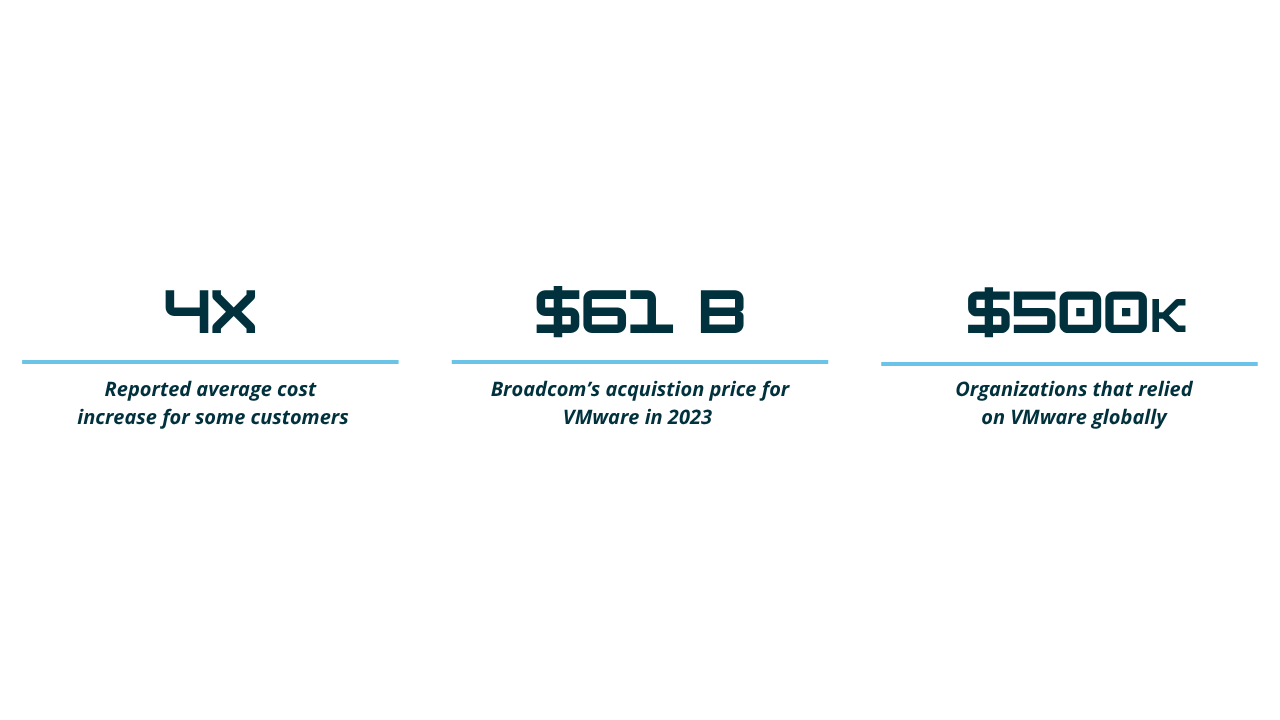
In early 2024, following its $61 billion acquisition of VMware, Broadcom moved quickly to restructure the product lineup and — critically — how it was priced. Perpetual licenses were eliminated. Broadcom shifted all customers to a subscription-based bundled model, grouping features together that many organizations had never needed and did not want to pay for.
The result was immediate sticker shock. Customers who had budgeted modestly for VM infrastructure renewals suddenly faced invoices that were, in some documented cases, several times higher than they had paid the year prior. Smaller organizations and public sector entities were hit particularly hard, as the new pricing tiers were not designed with scale flexibility in mind.
"We were told our renewal would cost roughly four times what we paid last year. There was no negotiation, no transition period — just a new price and a deadline." — A sentiment echoed across user forums and IT community boards throughout 2024-2026.
Beyond pricing, the restructuring created uncertainty around product roadmaps. Broadcom discontinued several standalone VMware products and consolidated support contracts, leaving many IT teams unsure about the long-term viability of their existing environments.
Are customers still looking for a way out?
The short answer: yes, many still are. While some larger enterprises have absorbed the increased costs or negotiated enterprise agreements, a significant portion of the mid-market and public sector is actively evaluating alternatives. Migration projects take time, and the complexity of moving virtual infrastructure means many organizations are still mid-journey.
The good news is that the landscape for VMware alternatives has matured significantly. Vendors across the open-source and enterprise spectrum have stepped up to offer compelling, production-ready platforms.
Enter Oracle Linux Virtualization Manager
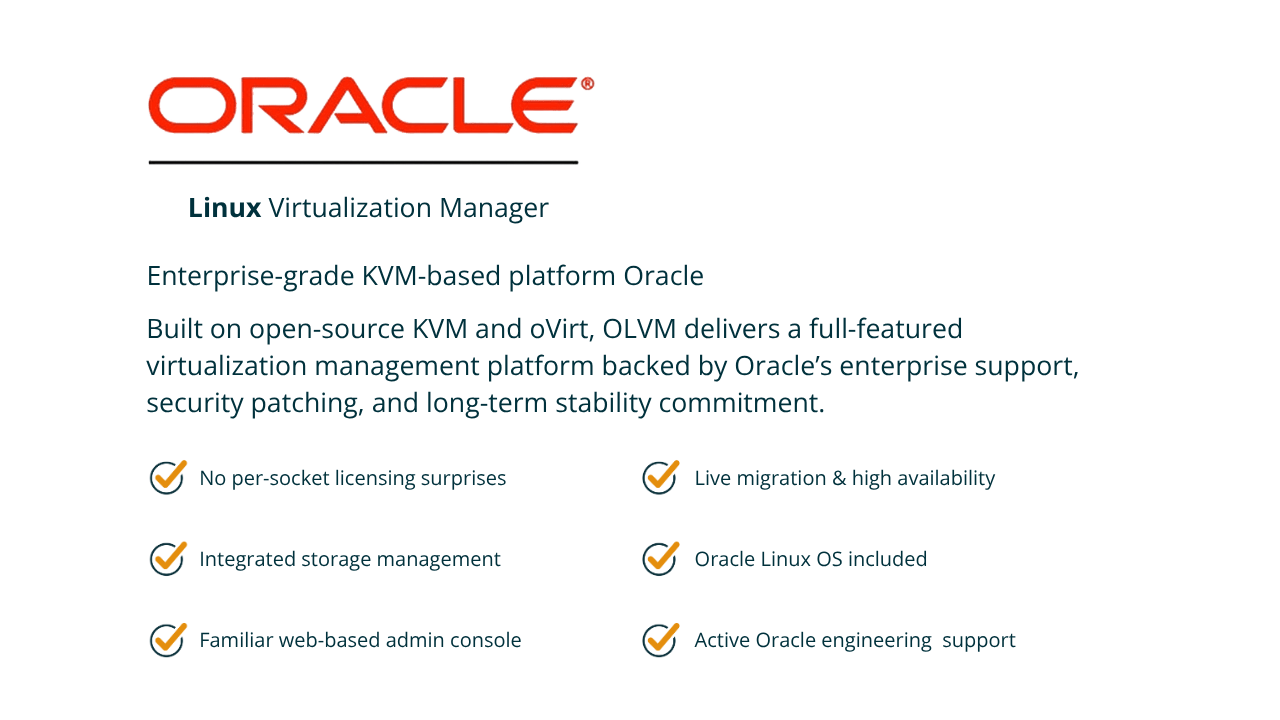
For organizations looking to reduce licensing complexity while maintaining the enterprise-grade reliability they need, OLVM presents a genuinely strong case. It is not a second-tier alternative; it is a platform that enterprise and mid-market teams are successfully running in production today.
iArch Solutions: Certified and Ready to Help
Our team at iArch Solutions is proud to be certified solutions providers for Oracle Linux Virtualization Manager. We have invested in the training, certifications, and hands-on expertise to help organizations evaluate, plan, and execute migrations from VMware to OLVM with confidence.
If you are still exploring your options, feeling the pressure of a VMware renewal deadline, or simply want to understand what a migration would look like for your environment, we would love to have a conversation.